




Severe bone loss in the jaw can occur in patients for various reasons (periodontal disease, trauma, oral hygiene issues, etc.). For patients with advanced bone loss, traditional implant treatment may not always be possible due to insufficient bone volume. In such cases, subperiosteal implants offer an innovative and effective solution.
Subperiosteal implants are placed on surface of the jawbone, beneath the gum tissue, and can be used in both the upper and lower jaw. Because they do not require bone grafting, these custom-designed implant frameworks provide a stable and reliable foundation for fixed prosthetic restorations, even in cases with minimal remaining bone.
At Dera Dental Clinic, we’re proud to offer highly successful subperiosteal implant treatments for patients who struggle with severe bone loss. What makes this possible is the expertise of our surgical team, led by a maxillofacial surgeon with over 25 years of experience in this field. We use only the highest-quality, world-class biocompatible materials and have years of experience treating even the most complex cases. By bringing all of this together, our goal is simple: to make sure you feel safe, well-taken care of, and fully confident in the long-lasting, natural-looking results we aim to deliver—no matter how challenging your situation may be.

For Subperiosteal implants, our valued patients typically need to stay in Istanbul for 7 days. The exact duration may vary depending on the number of implants placed.

Subperiosteal implant prices range from €4500 to €22.500, depending on the brand and type of crown you choose. Restore your smile without compromising on the quality you deserve.

We use only the highest quality dental implant brands, which is why we offer a lifetime warranty on our implants and a 5-year warranty on crowns.
Subperiosteal implants are one of the procedures applied in patients with partial or total tooth loss (edentulism), under conditions where bone volume cannot be augmented with bone graft procedures, or when bone graft procedures are not preferred by the patients. They are custom-made implants. Unlike conventional implants, it is not a system placed into the bone, but rather an implant system placed on the bone surface and beneath the soft tissue called the periosteum, which covers/surrounds the bone surface.
This method offers patients the possibility of a fixed prosthesis in a short time, thanks to the titanium frame structure placed specifically on the bone (under the periosteum). In this way, dental implant treatments can be performed for patients who have experienced severe bone loss due to reasons such as periodontal disease or trauma.
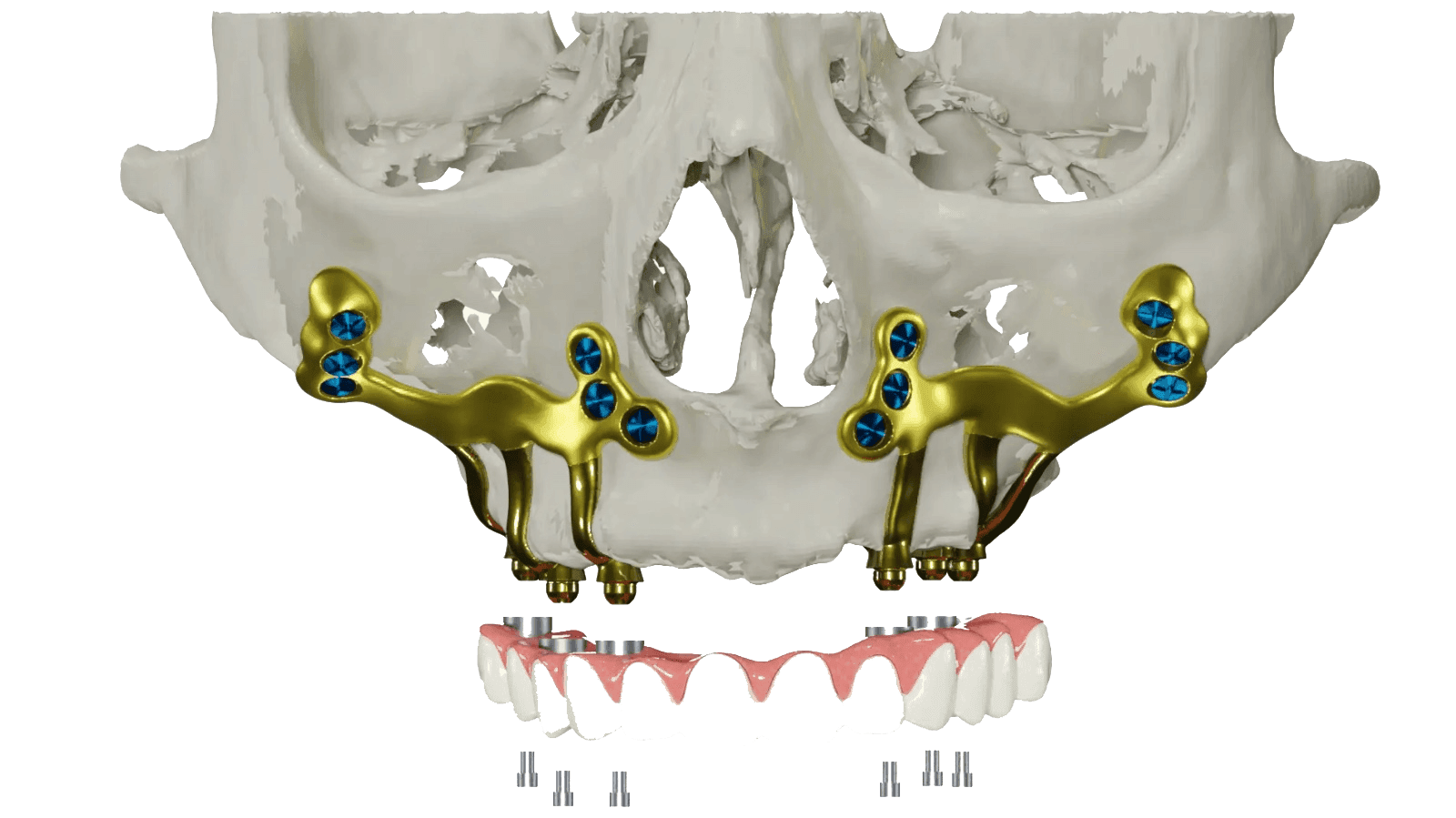
Subperiosteal implants are an ideal option in the following situations:
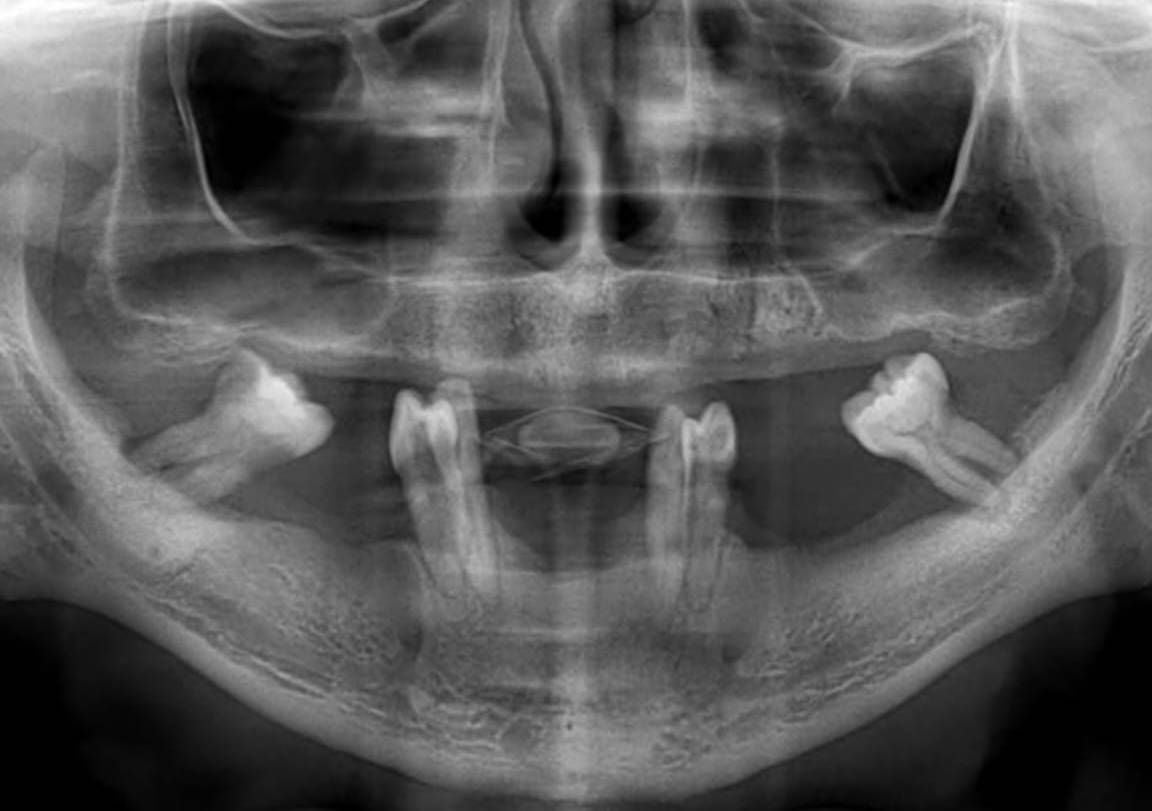
1. Digital Scanning and Planning
A 3D tomographic image of the jawbone is taken.
The bone surface is modeled with millimetric precision from this image.
The skeletal structure of the subperiosteal implant is custom-designed using CAD/CAM technology.
2. Production (Titanium Structure)
The design is produced from titanium in the laboratory using a three-dimensional printer (3D printer).
This structure is prepared to be 100% compatible with the patient's jaw anatomy.
3. Surgical Application
Although the operation can be performed under local anesthesia, general anesthesia is generally more preferred.
The surgeon gains access under the gum (gingiva) and fixes the implant skeleton to the bone surface.
The “abutments,” to which the dental prostheses will be attached, mostly come connected to the implant unit. The surgical procedure is concluded by attaching healing caps to these units.
4. Prosthesis Stage
Shortly after the implant skeleton is fixed, the fixed prosthesis (bridge or full-arch restoration) is attached to the patient.
It is usually possible to have permanent fixed teeth within 2–3 weeks.
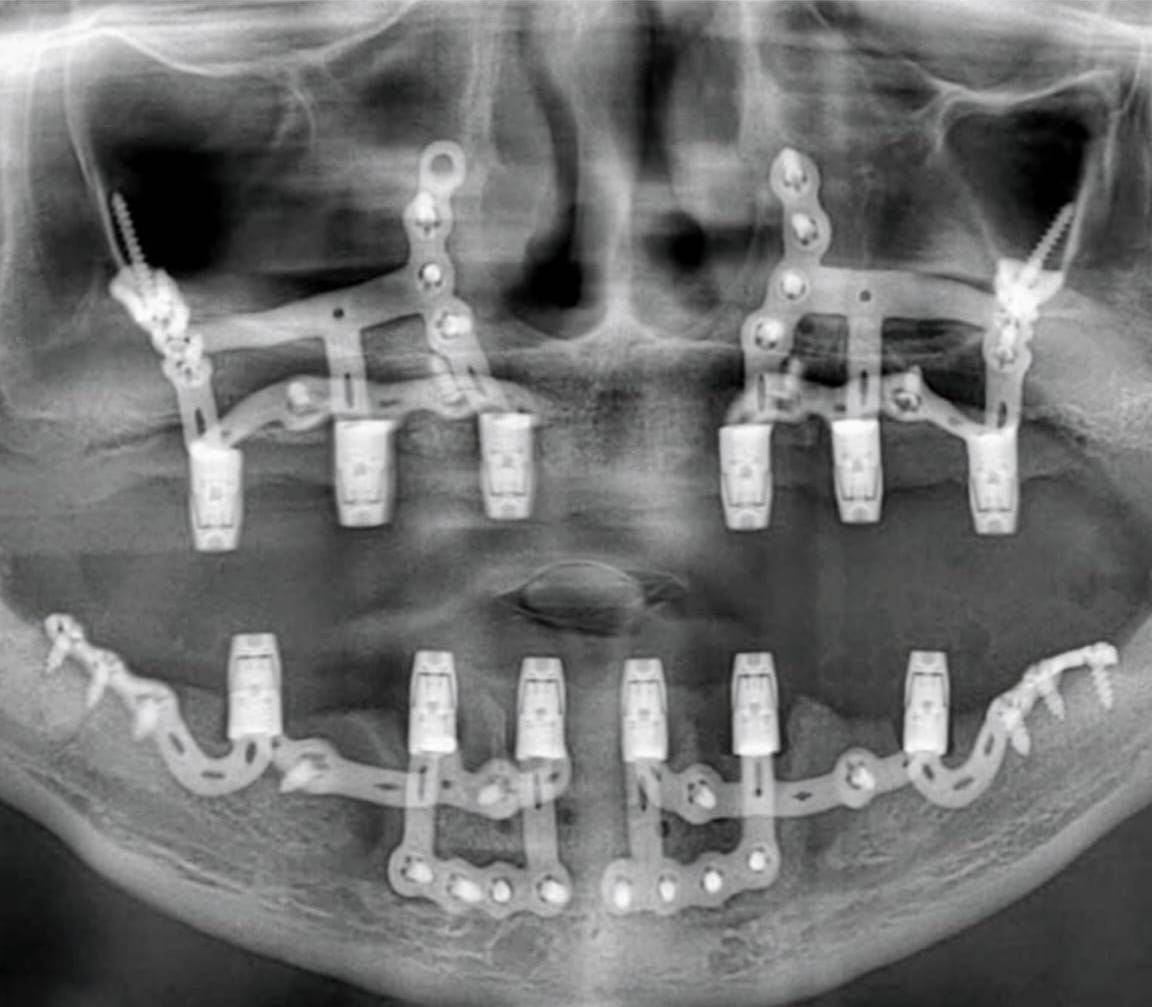
Subperiosteal implants and zygomatic implants are two different solutions that enable implant placement in patients with significant bone loss.
The subperiosteal implant is a special metal structure placed on the jawbone, under the gum line. This method is ideal for patients with very little or no bone volume. Its surgical procedure is simpler compared to the Zygomatic implant; healing is generally achieved within 2–3 weeks, and the patient can get new teeth in a short time. Post-operative comfort is high, and pain is minimal.
The Zygomatic implant, on the other hand, is a long type of implant placed in the cheekbone (zygomatic bone). It is particularly preferred when bone resorption in the posterior regions of the upper jaw is at an advanced level. This surgery is more comprehensive, and the recovery period usually lasts 4–6 months. Short-term swelling and discomfort may be experienced in the post-operative period.
The cost of a Subperiosteal Implant in Turkey ranges between 4,500 euros and 22,500 euros. The cost of subperiosteal implants varies with the complexity of the case and the number of implants required.
Custom-produced subperiosteal implants are more expensive than endosteal implants due to the special production of the metal framework and the more complex surgical procedure.

The Dera Dental Clinic team closely monitors the patient at every stage post-operation and invites them for check-ups.
The information on this page is for informational purposes only. Each individual’s situation may vary; please consult your doctor or our clinic for personalized advice.
Yes. The classic implant is placed into the bone, whereas the subperiosteal implant is fixed onto the upper surface of the bone.
Yes. Thanks to this system, a fixed prosthesis can be made even if the bone volume is low.
Yes, since the titanium skeleton sits directly on the bone surface, it is highly stable and long-lasting
Usually, the soft tissue heals within 7–10 days. The permanent prosthesis can be placed within 2–3 weeks.
If the procedure was performed under local anesthesia;
if the procedure was performed under general anesthesia;
Whether the procedure is performed under local anesthesia or general anesthesia, the patient experiences pain that can be easily controlled with painkillers after the procedures. There might be mild swelling or sensitivity that can last for a few days after the operation; these are normal.
With proper oral hygiene and regular check-ups, it can last more than 10 years. Since its metal structure is made of titanium, it is biocompatible and long-lasting.
Yes, a natural appearance is achieved because the teeth are custom-designed. It yields successful results, especially in patients aiming for smile aesthetics.
No. Because subperiosteal implants require advanced surgery and digital planning, they must be applied by experienced oral, dental, and maxillofacial surgeons. Therefore, it is not performed at every clinic; it requires special equipment and expertise.
Its maintenance is not very different from classic implants, but it is very important that it is done regularly and carefully.
Regular check-ups are very important: visit your dentist at least twice a year.